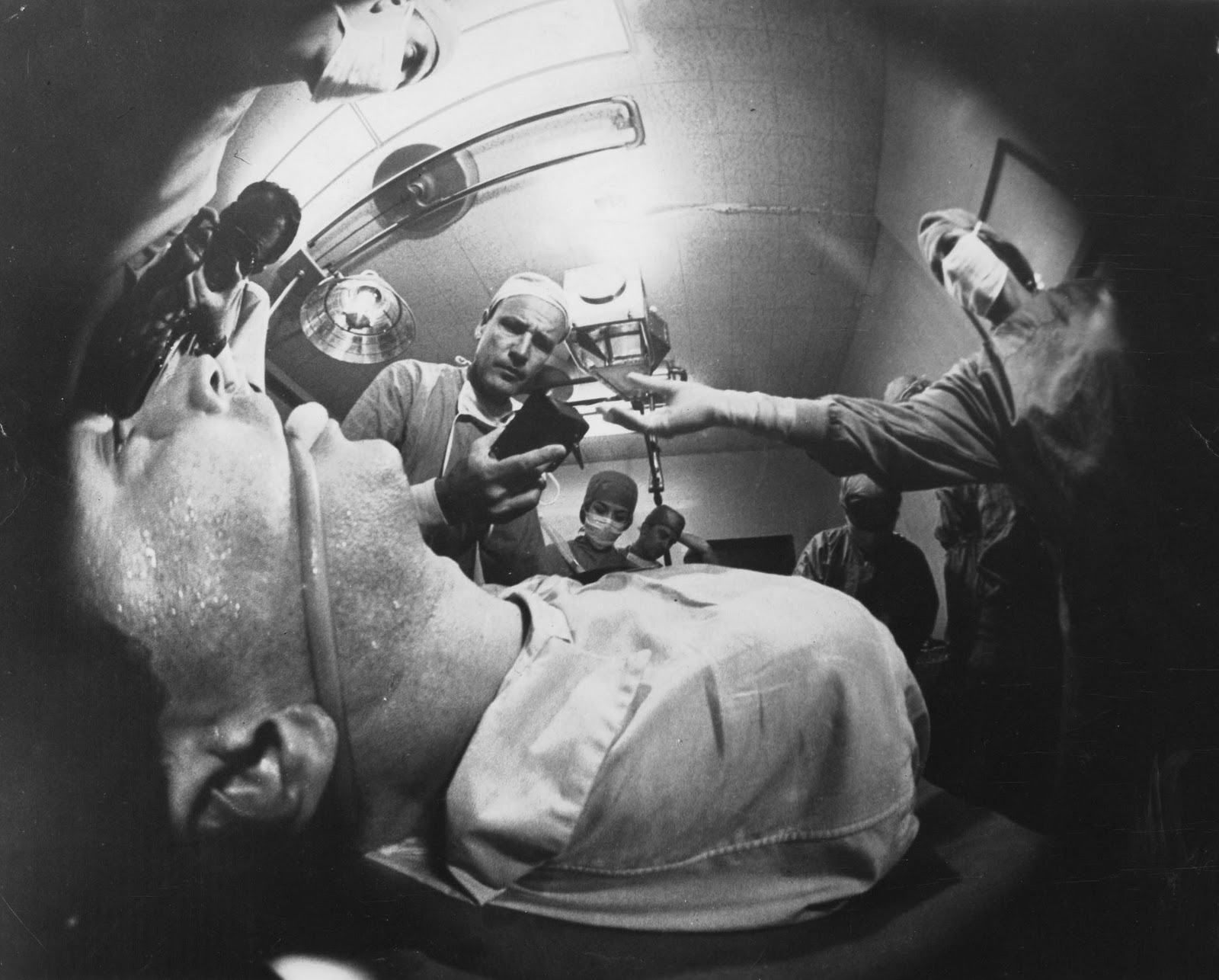
I decided to take another trip down to the dollar theatre to see Neil Burger's new(ish) psychodrama Limitless. All I knew going in was that the film was directed by this Burger guy (who I would later find out also directed the pedestrian-but-acceptable The Illusionist), and that the film is part of a new wave of convoluted identity-themed psychodramas (Inception [bleghh], The Adjustment Bureau, Source Code, Unknown). Identity themes became of great interest to me when, while exploring 40s film noir I happened upon a film with a face transplant theme, Dark Passage, which I realized had been echoed over and over throughout cinema (Face of Another, Face/Off, Time, Seconds), and is actually a much older theme if you consider a broader definition and earlier cinematic works such as Robert Wiene’s 1924 film Hands of Orlac, which itself was remade several times.
Upon purchasing my ticket and lumbering past the ticket taker, I was greeted by the familiar dimly lit purple and green hallways, stinking of stale popcorn, but quiet and air conditioned. These hallways are lined with photos of Douglas Fairbanks, Greta Garbo, John Barrymore and various 20s and 30s stars whose names likely mean little to the endless stream of families, dates and young students who pass through them. My lush cinema paradise, my seat a private throne, complete with my own (painfully overpriced) concession stand and tacky black/white/pink/green restroom. I exhaled deeply in secret thanks to the recession, for its breathing new life into the once forgotten industry of the discount cinema, and settled into my seat as the lights dimmed. This temple has been my haven, literally for decades, my fortress of solitude where I retreat to watch second run garbage I would never dare to spend decent money on in the regular theatres. My patronage of this establishment has allowed for me to discover hidden gems over the years which I certainly would have overlooked otherwise, as my purchases and library acquisitions are generally more focused on serious watching. While Limitless is certainly not a cinematic treasure to which I will return over and over, Limitless was a pleasant pedestrian affair.
The film tells us the story of Eddie, a depressed writer in a stagnant period of his life, who finds himself in the possession of a large quantity of a drug that allows him access to the eighty percent of the human brain that humans are supposedly unable to use. This situation results in his entanglements with women, fast cars, a Russian loan shark, a powerful businessman performed by Robert DeNiro, a shady man in a khaki overcoat who follows him. Meanwhile, Eddie discovers that withdrawal from the drug can be fatal, and he finds himself suffering from adverse effects of the drug in which he blacks out and jumps forward in time.
What we are given for our $1.50 is an endlessly convoluted plot, and an ambiguous ending where it is unclear if Eddie is still using the drug or not. What is clear is future in political leadership (at the end of film he is running for Senate –and we presume that this is the first step towards his becoming president, which is also alluded to by DeNiro). DeNiro’s businessman character, now owner of the company that manufactures the drug, pressures Eddie with the threat of revealing the truth behind his seeming genius, but Eddie counters that he had actually engineered new version of the drug which he has used as a means of safely getting off of the old drug, and that he is now completely clean. The last shot of the film is a knowing wink from Eddie to the audience, which leaves us unclear as to whether or not Eddie has duped DeNiro into thinking he is off the drug, or if he has duped us into thinking he is still on it.
The film is slick and stylish, impressing us with cool visual techniques in which the camera moves forward, quickly, through the illusion created by two mirrors facing each other. Loud pop music bursts forth from the theatre’s sound system. Eddie’s life before the drug is dull and depressing, indicated to us by muted gray colors of Eddie’s world before he discovers the drug. After, the world we inhabit is filled with bright, fun, slightly oversaturated colors.
The film’s identity politics were immediately of interest to me. The film itself is perhaps symptomatic of a societal assumption that if we as individuals find ourselves unhappy, there must be something wrong with us internally, rather than our surroundings or the way that we are living life. We have become so unhappy with the environment that we have engineered for ourselves that we seek to alter ourselves chemically to better interact with our environment. It would seem that if 1 in 10 Americans were prescribed antidepressants in 2005 (according to a 2009 USA Today article), that perhaps the problem is actually one with our society. The notion that 10% of the public has brain chemistry preventing them from leading a happy and productive life is absurd, but this is of course a political trajectory that is better continued elsewhere.
Limitless is entertaining, but its premise asks of its viewer a tremendous degree of willful suspension of disbelief. A core element of the plot requires us to forget that we actually use close to 100% of our brain, close to all of the time. Additionally, we are asked to believe that somebody who HAS somehow been chemically altered to unlock all of this unseen potential, and is now infinitely more intelligent, would improve himself, only to achieve incredible yet bland narcissistic material success.
We see Eddie driving wrecklessly in fast cars, engaging in risky sexual encounters with strange women, and diving off of dangerously high cliffs into water of unknown depth below. Eddie at one point claims of the drug’s effect, “I knew what I needed to do, and I knew how to do it,” but this would not allow him to dodge unseen oncoming traffic, or to avoid diving into rocks several feet below the surface, and his purported increase in intelligence would surely grant him awareness of the rashness of these decisions.
In spite of my gripes with this movie as bending to Hollywood stylistic conventions, I did rather enjoy it, the theme was of interest to me due to my interest in the face transplant micro-genre I became interested in, and the intertextuality with the identity politics with the face transplant sub-genre. Limitless is essentially an inversion, of the theme of the face transplant film, in which characters give up their exterior identity, through which they have previously interacted with their world. In Limitless, Eddie sheds his internal lens through which he views the world, in favor of a version of himself with superhuman intellect.
Upon rekindling his relationship with his ex-girlfriend, and after she finds out about the drug, his again-girlfriend tells him that she doesn’t like that he is on it, and that it makes him act like a different person. He refutes this, claiming “I’m still the same person,” but earlier in the film Eddie himself makes a distinction between Eddie and “Enhanced Eddie.” Whether or not he wants to accept it, this dichotomy exists, and his choices pertaining to the drug may have far reaching consequences.
Are we so unsatisfied with ourselves that our protagonist's behavior is acceptable? The open ended last moments of the film, allow us to make our own conclusions about Eddie's decision, and serve as an insight into our individual values and what we would do in Eddie's shoes. We are not supplied any answers, and this is left for us to chew on, but the film’s presentation is so slick and stylish that the question is nearly drowned out by the catchy, lurching music that blares as the end credits begin to roll.
Though flawed, Limitless was a good use of my spare change, and resulted in another nostalgic trip to the dollar theatre, where I have crouched silently in the darkness, watching, for countless hours of my life. As I initially stated, I won’t be revisiting this particular film again any time soon, but I did find the film’s politics interesting, and there is some degree of depth to the film, in spite of its vain posturing, should the viewer choose to seek it out.